

Articles
Summary:
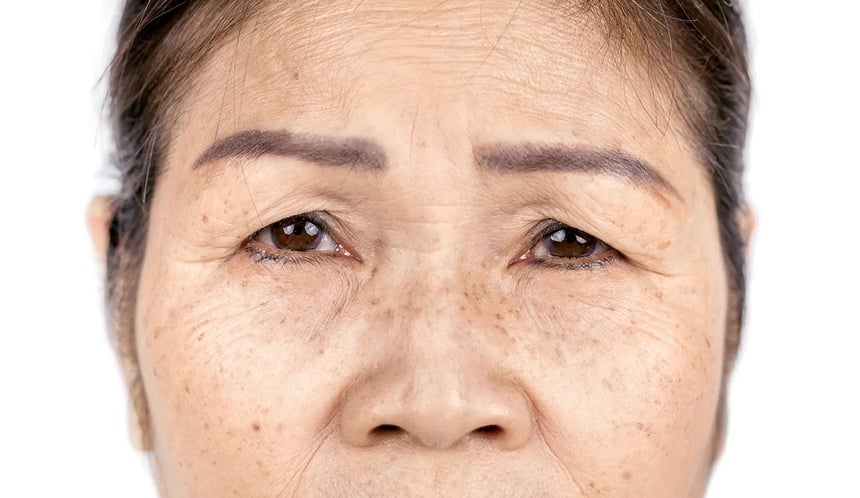
If your eyelids have started to look heavier, or you find yourself raising your brows to see more clearly, you may be experiencing droopy eyelids caused by ptosis or excess skin.
Droopy eyelids can affect both how you look and how you feel day to day. If you’ve been thinking about getting it fixed, the first step is to understand why it’s happening in your case. Once you know the cause, you can choose a treatment that actually targets the problem.
There are both surgical and non-surgical treatment options for droopy eyelids, and each works differently depending on the cause of the condition.
Keep reading to learn more.
Droopy eyelids typically develop due to either ptosis or dermatochalasis. While they may appear similar when you look in the mirror, they involve different underlying causes—and choosing the wrong treatment may not address the issue effectively or deliver the outcome you’re hoping for.
If you have ptosis, the issue lies in your eyelid muscle. The levator muscle, which lifts your eyelid, may have weakened or stretched over time. This can happen with ageing, long-term contact lens use, injury, or certain medical conditions.
Because this is a muscle issue, treatments that focus only on the skin will not fully correct the droop—you’ll need an approach that addresses the muscle itself.
Common signs and symptoms of ptosis include:
If your concern is dermatochalasis, you’re dealing with excess skin rather than muscle weakness. As your skin loses elasticity over time, it can begin to sag and fold over your upper eyelids, creating a hooded or heavy appearance
In these cases, your eyelid muscle is still functioning normally—the issue comes from the extra skin resting over it. Therefore, treatment focuses on removing or tightening this excess tissue.
Common signs and symptoms of dermatochalasis include:
If your droopy eyelids are affecting your vision or bothering you consistently, surgery may be the most direct way to correct the problem. The right procedure depends entirely on what’s causing your droop.
If you have ptosis, you’ll likely need a corrective procedure to tighten or reposition your eyelid muscle. During this procedure, your surgeon will lift your eyelid back to a more natural position to help restore your field of vision.
The procedure is usually done under local anaesthesia, and you can go home the same day. You should expect some swelling or bruising in the first one to two weeks, but it settles gradually.
If excess upper eyelid skin is affecting how your eyes look or function, surgery is often the most effective way to address it.
Dermatochalasis removal aims to remove the extra skin, reduce heaviness, and help restore a more open, natural eyelid contour that still suits your facial features.
Depending on how much excess skin you have and your eyelid anatomy, your plastic surgeon typically approaches the procedure in two main ways:
If your droopy eyelids are mild or you’re not ready for surgery, you can consider non-surgical treatments. These minimally invasive options work by improving skin quality or creating a subtle lifting effect around your eyes.
Common non-surgical approaches include:
That said, these treatments won’t remove excess skin or correct muscle weakness for droopy eyelids. What they can do is give you a fresher, less heavy appearance—especially in the earlier stages. You’ll also need to maintain the results over time, as these effects are not permanent.
Experiencing droopy eyelids? Our experienced plastic surgeons will closely examine your eyelids, discuss your concerns, and guide you toward the right treatment plan based on your goals and anatomy. Contact Polaris Plastic and Reconstructive Surgery today.
You don’t have to figure this out on your own—but you do need a proper assessment. What looks like a simple droopy eyelid could actually be a combination of muscle weakness and excess skin.
During a consultation, your plastic surgeon will assess your eyelid position, muscle function, skin quality, and whether your vision is affected.
If your eyelids are getting in the way of daily activities, surgery may be the more appropriate route. If your concerns are mild and mainly aesthetic, non-surgical options might be enough for now.
If you’re wondering whether your treatment is covered for droopy eyelids, it depends on why you’re having it done.
In Singapore, procedures considered medically necessary—such as those affecting your vision due to ptosis—may be eligible for Medisave claims or partial insurance coverage.
If your treatment is purely for aesthetic reasons, it is generally not covered. To determine eligibility, you may need assessments such as visual field testing, along with proper documentation from your doctor.
It’s worth checking your insurance policy early, so you know what to expect before making a decision.
If you’ve been noticing changes in your eyelids—whether it’s heaviness, asymmetry, or vision obstruction—the next step is to get clarity on what’s causing it.
At Polaris Plastic and Reconstructive Surgery, we’ll assess the severity of your droopy eyelids and carefully consider your anatomy, concerns, and goals before recommending a suitable treatment.







Learn more about Dr Adrian Ooi, Dr Pek Chong Han, Dr Pek Wan Sze and the team