

Articles
Summary:
Most people assume that once the fat is gone, the result simply holds. That's partly true and partly not. Liposuction does permanently remove fat cells from treated areas but your body doesn't stop changing just because those cells are gone. Weight fluctuations, hormonal shifts, ageing, and lifestyle all continue to shape the areas around and within the treated zone. How long your results last depends less on the procedure itself and more on what happens after it.
To understand how long results last, it helps to understand what liposuction changes inside your body, and why that change is different from what most other fat reduction methods achieve.
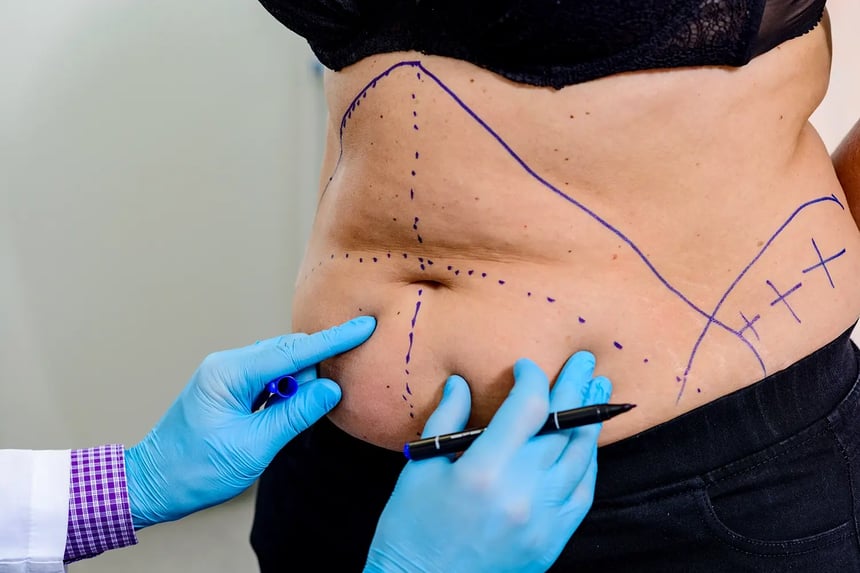
Liposuction works by physically removing fat cells from targeted areas of the body using a thin tube called a cannula (a hollow surgical instrument inserted beneath the skin). Once those fat cells are suctioned out, they do not grow back. The reduction in fat cell number in the treated area is permanent.
This is the biological basis for liposuction's longevity. Unlike topical treatments or devices that temporarily shrink fat cells, liposuction eliminates them entirely.
Liposuction removes a significant proportion of fat cells in the treated area, but it does not remove all of them. The fat cells that remain are still metabolically active, which means they can expand if your calorie intake consistently exceeds your energy expenditure. This is why weight management after liposuction plays such a central role in how long your results last.
Liposuction results typically vary. Here’s what the evidence suggests across different timeframes.
Immediately after a liposuction in Singapore, swelling, bruising, and fluid retention will obscure your results. Patients may begin to see meaningful changes around four to six weeks post-procedure, as the swelling subsides.
At Polaris Plastic & Reconstructive Surgery, our surgeons typically advise patients to expect their final result between three and six months post-procedure, once deeper swelling has fully resolved.
For patients who maintain a stable weight, liposuction results can last many years, and in many cases, indefinitely. The structural change to the fat cell distribution in the treated area persists regardless of time. The key variable is weight: significant gain can expand remaining fat cells and alter the contour that the procedure created.
Certain areas tend to respond particularly well to liposuction and hold their results with fewer complications. These include:
Liposuction changes the structure of a body that continues to age, respond to hormones, and fluctuate in weight. Several factors can influence how your results hold up over time.
Gaining a substantial amount of weight after liposuction is one of the main reasons results diminish over time. When fat cells in untreated areas expand, they can create new areas of imbalance that were not present before the procedure. In some cases, the treated area itself may change if remaining fat cells enlarge significantly.
As you age, your skin naturally loses some of its elasticity and firmness. In patients with moderate skin laxity at the time of surgery, this process may become more noticeable over the years. Your surgeon will assess your skin quality during consultation and discuss whether additional procedures, such as a minimally invasive radiofrequency skin tightening treatment or a body lift procedure, might be appropriate for your situation.
Several factors beyond weight can influence how your body stores fat over time. Hormonal changes that may affect results include:
Lifestyle factors that can gradually shift body composition include:
Not sure how your lifestyle, hormones, or health history might affect your outcome? These are the kinds of questions worth raising at a consultation. Book a time to speak with one of our plastic surgeons at Polaris Plastic & Reconstructive Surgery and get answers specific to your situation.
What you do in the months and years that follow has a direct bearing on how well your liposuction results hold up.
You don’t need to achieve a specific number on the scale. Rather, the goal is to avoid significant fluctuations. Surgeons typically recommend staying within roughly five kilograms of your post-procedure weight.
A balanced diet that supports your energy needs without consistent excess, combined with regular physical activity, gives your results the best chance of longevity. Resistance training is particularly useful for preserving muscle mass and supporting metabolic health as you age. Cardiovascular exercise helps with overall energy balance.
In the weeks following liposuction, your surgeon will likely recommend wearing a compression garment over the treated area. At Polaris, compression garments are provided after the procedure and are recommended for at least six weeks. They help reduce swelling, support the skin as it contracts to its new contour, and may reduce the risk of fluid accumulation beneath the skin (known as seroma).
Attending your scheduled follow-up appointments allows your surgeon to monitor healing, identify any concerns early, and advise you on the right time to resume exercise or other activities. At Polaris, patients are typically reviewed at two days, two weeks, and two to three months after the procedure.
You may also be considering fat freezing and wonder how it compares with liposuction. Here’s what you need to know.
|
Factors to Consider |
Liposuction |
Fat Freezing (Cryolipolysis) |
|
How It Works |
Physically removes fat cells via cannula under anaesthesia |
Uses controlled cooling to cause fat cell death; cells are cleared naturally by the body |
|
Volume Of Fat Removed |
Larger volumes in a single procedure |
More modest reduction; may require multiple sessions |
|
Surgical Or Non-Surgical |
Surgical |
Non-surgical |
|
Downtime |
Approximately one week |
Minimal to none |
|
Contouring Control |
High: Surgeon controls the result directly |
Lower: Results depend on device placement and fat layer thickness |
|
Long-Term Durability |
More predictable for significant contouring |
Durable for small, localised areas; less predictable at volume |
|
Recommended For |
Patients wanting clear, defined results from one procedure |
Patients with small areas of concern and a preference for no surgery |
For patients seeking significant, clearly defined body contouring, liposuction tends to offer more predictable and pronounced long-term results.
Fat freezing may suit patients with smaller, more localised areas of concern and who prefer a non-surgical approach.
The removed fat cells don't return. However, the cells that remain (in treated and untreated areas) can still expand if you gain significant weight after the procedure.
For most patients at a stable weight, yes, provided they maintain that weight afterwards.
Most patients see the majority of their results in three months. Final results, including full resolution of swelling and skin settling, typically take up to six months.
If you've been living with stubborn areas of fat that haven't shifted despite consistent effort, it's worth getting a professional assessment of your options..
At Polaris Plastic & Reconstructive Surgery, our doctors have years of experience in helping patients of various sizes and shapes achieve their ideal figure. Get in touch with us to arrange your consultation.







Learn more about Dr Adrian Ooi, Dr Pek Chong Han, Dr Pek Wan Sze and the team