

Articles
Summary:
If you’re considering liposuction in Singapore, you’re likely wondering which type suits your needs and what the process actually involves.
With different techniques available, each designed to remove fat in slightly different ways, it’s important to understand your options before making a decision.
This guide walks you through the common types of liposuction used here in Singapore and what to expect before, during, and after the procedure, so you can decide if it’s right for you.
Liposuction is a procedure that removes fat from targeted areas of the body. It involves inserting a thin tube through small incisions to break up and suction out fat cells.
The goal is not weight loss, but reshaping—helping your body look more proportionate by addressing areas that don’t respond easily to lifestyle changes.
Liposuction targets stubborn fat deposits that are difficult to reduce through diet and exercise alone. It can help refine body contours, improve proportions, and enhance the fit of your clothing, resulting in a more balanced overall shape.
Common areas include:
Liposuction is intended to refine body contours rather than large-scale weight loss. You might consider it if you’re close to your usual weight but notice pockets of fat that don’t respond to diet or exercise.
Younger people often have better results because their skin contains more collagen and elastin, making it more flexible and responsive. This elasticity allows the skin to contract and “snap back” over the treated areas after fat is removed, helping the contours look natural and preventing sagging.
As we age, these proteins decrease, so those with older skin may take longer to adjust or may need additional treatments to support firmness.
Different techniques are used in liposuction, depending on the area treated and the treatment plan. Each method focuses on breaking down and removing fat in slightly different ways.
This approach involves injecting a fluid solution into the treatment area before removing fat. The solution helps reduce bleeding and makes fat easier to extract. It is widely used and can be suitable for larger areas where a straightforward fat removal approach is needed.
This method uses ultrasound energy to loosen fat cells before removal, making it easier to address specific areas.
VASER liposuction works by breaking down thicker or more fibrous fat while leaving the surrounding tissue intact. It’s helpful for areas where targeted fat removal is needed for balanced contours.
Laser-assisted liposuction uses heat energy to liquefy fat before it is removed. The heat can also support some skin tightening, which may be relevant if you have mild skin laxity.
This approach is often used for smaller or more delicate areas where both fat reduction and subtle tightening are considered.
This method uses a vibrating device to break up fat cells, making them easier to remove. It allows for more controlled and consistent fat removal, especially in larger treatment areas.
On-FA liposuction uses controlled radiofrequency energy to break down fat and tighten tissue at the same time, making it a good option if you want to reduce stubborn fat and improve mild to moderate skin laxity in a single session.
Interested in removing stubborn fat and refining your shape? Call Polaris Plastic and Reconstructive Surgery today to find out if you’re a suitable candidate and which liposuction approach fits your needs.
Here’s what happens during and after liposuction so you can plan and set realistic expectations.
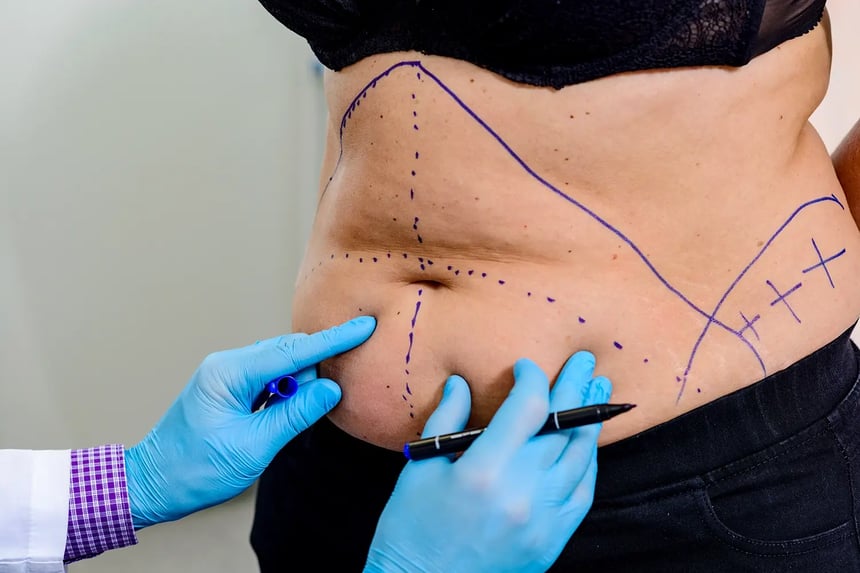
Before starting, your surgeon will examine the areas you want to treat and mark them to guide the treatment. Small incisions are made, and a thin tube (cannula) is inserted to remove fat.
In techniques like VASER or OnFA liposuction, ultrasound or radiofrequency energy breaks down fat before removal, making it easier to extract and reducing the effort needed with the tube.
Local or general anaesthesia helps you stay comfortable and relaxed throughout the procedure.
Recovery can vary depending on the extent of the procedure and how your body heals. Here’s a general timeline.
If you’re considering liposuction, the first step is to understand your options and whether the procedure aligns with your goals. A consultation with a plastic surgeon allows you to discuss your concerns, ask questions, and find out which approach may be suitable for your needs.
At Polaris Plastic and Reconstructive Surgery, one of our experienced plastic surgeons will assess your body shape, skin condition, and the areas you would like to address. From there, you can have a clearer idea of what the procedure involves and what kind of outcome to expect.







Learn more about Dr Adrian Ooi, Dr Pek Chong Han, Dr Pek Wan Sze and the team