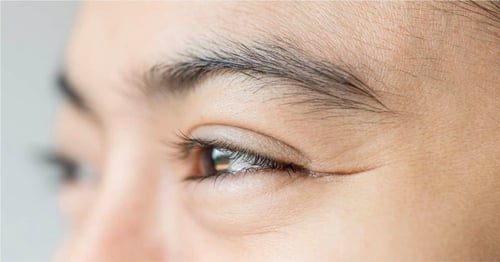
Ptosis is the drooping or falling of the upper eyelid. Although most of the time it is a condition that comes with age, it could also be caused by disease, injury, or be completely genetic. Ptosis can be unsightly and an annoyance, and in more serious cases it can even affect your field of vision.
Correcting droopy eyelid ptosis offers both functional and cosmetic benefits, including:
Results are typically long-lasting when performed by an experienced surgeon using proper technique.
What are The Symptoms of Ptosis?
Living with ptosis can oftentimes be difficult, especially when it hampers your vision. If you find yourself suffering from these symptoms, you may have ptosis:
Aesthetic Concerns
As mentioned earlier, ptosis is defined by the drooping of the eyelids over the eye. Visually, other people may think a person with ptosis looks tired when in fact, they are not. Ptosis can indeed also make a person seem older than they really are.
On top of that, other people may be unable to see the pupils of a person with ptosis and not know if he or she is even looking at them.
Functional Problems
For people with more serious cases of ptosis, they actually lose visual fields in the upper and outer parts and this is due to the eyelid's descent. This means objects above eye level and in the periphery are much harder to see.
As they walk, they may start knocking into things. Reading and watching TV will become difficult activities. Driving becomes a hazard for people who suffer from ptosis as well.
To compensate for the inability to lift their eyelids, people usually lift their foreheads instead to see better. This can also tire out the frontalis muscle in the forehead in the process and potentially lead to more forehead wrinkles.
Other physical symptoms may include trouble blinking, eye fatigue, trouble closing the affected eye, tearing, and double vision.
Can Ptosis Go Away on Its Own?
Unfortunately, Ptosis will not go away on its own.
In many cases, the condition is progressive in nature and could worsen over time. Unless you seek treatment for ptosis, the condition will not recover on its own.
You can try doing regular eye exercises for mild cases of ptosis but this may not always be effective. If it is indeed a problem with the skin such as excess skin, minimally invasive aesthetic procedures that tighten the skin via lasers or radiofrequency can actually help.
However, most of the time, substantial cases of ptosis will require surgery to properly treat it. Lucky for us, surgery can be performed to help correct ptosis.
How is Ptosis Diagnosed?
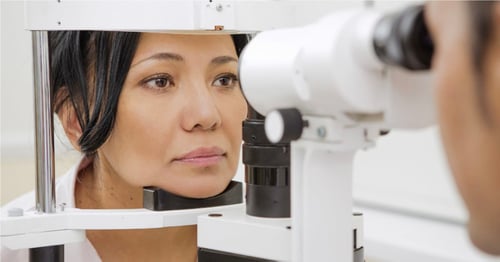
It may be easy to tell if someone has ptosis on the surface, but a medical process is needed to discern and understand its causes and the extent of the condition, in order to craft a proper treatment plan.
Do note that both a plastic surgeon and an ophthalmologist (eye doctor) can assess and diagnose your ptosis condition.
Other than a quick inquiry of the symptoms the patient experiences, the following examination procedures could also be performed:
Marginal Reflex Distance (MRD)
One test looks at the Marginal Reflex Distance (MRD), which is the distance between the center of their pupil and the edge of the upper eyelid.
Usually, the patient is asked to focus on a torchlight while we measure the distance between the reflection on the cornea and the upper eyelid margin for the MRD. [4]
If this distance is measured to be 2 millimeters or less, it is highly likely that the patient is experiencing ptosis. This measurement observed indicates that the ptosis condition poses a functional problem and can be covered by insurance.
Levator Function
We also look at the levator function. The levator muscle is responsible for lifting the upper eyelid. The test involves asking the patient to look down and then look all the way up.
For instance, we would hold a thumb against the patient’s eyebrow while they look downwards, to ensure only the levator muscle in the eyelid is used. The patient is then asked to look upwards and the distance the eyelid travels is measured.
This allows us, doctors, to determine if the levator function is working properly or if there is a problem with the muscle.
The following measurements of eyelid movement indicate varying levels of ptosis severity [5]:
- Good (>10 mm)
- Moderate (5-10mm)
- Poor (0-4 mm)
Examining the levator function is crucial to finding the best treatment or surgical procedure to administer.
Other Relevant Tests
To cover all bases, we also take a few other key measurements around the eyelid and examine the upper eyelid skin if there is any excess skin that should be removed.
When we look at patients with ptosis, we need to take note of the eyebrow position on top of the upper eyelid because these are key indicators to help decide the treatment for the ptosis condition.
How is Ptosis Treated in Singapore?
The main method of treating ptosis in Singapore is surgical. However, if the patient is not suitable to undergo surgery, ptosis crutches can be used instead. These are small contraptions that are attached to the spectacle frames and help physically lift the eyelids up.
For the surgical route, what usually happens is that a plastic surgeon or an oculoplastic surgeon will assess the condition of ptosis, its causes, and the course of action to correct it.
Depending on the cause of the ptosis, perhaps excess skin or loosening of the muscle, we can then do the relevant surgical procedures to remove the excess skin or tighten the muscle.
The surgical process is known as
blepharoplasty, which basically means surgery involving the eyelids.
Blepharoplasty Ptosis Surgery
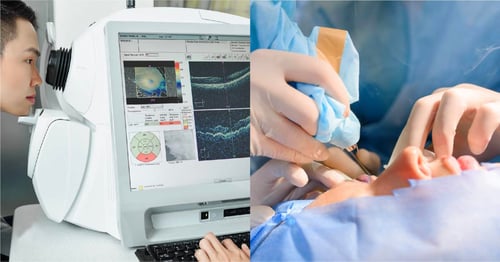
In general, local anaesthesia will first be applied to your eyelids. Then, depending on the course of action decided earlier, an incision may have to be made to access the levator muscle.
Many more complicated steps are taken to reach the levator muscle. Levator muscle advancement or resection may then be carried out. It can be done through different access points. [6]
In the end, the incision will be sutured up to form a relatively invisible scar.
How Much Do Ptosis Treatments Cost?
Ptosis correction surgery can cost between
$5,000 to $12,000 depending on the surgeon fees, anaesthetic fees, facility fees, and medication prescribed.
Can You Use Medisave/ Insurance for Ptosis Treatment?
It depends.
If you would like to get Medisave or insurance coverage for your ptosis treatment, you will need to get an official visual assessment by an ophthalmologist. This means that your ptosis affects your vision significantly based on conditions stipulated by the Ministry of Health (MOH). [7]
The ophthalmologist is responsible for providing the information that you could then send in for a Medisave or insurance claim.
Otherwise, if your ptosis condition is not serious enough or mostly aesthetic in nature, you will not be able to make those claims.
Can Ptosis Be Treated With Double Eyelid Plastic Surgery?
It is possible.
Double eyelid surgery is very similar to ptosis operations. It is possible to create a double eyelid as a ptosis condition is corrected. Alternatively, we can modify the height of the eyelid fold while correcting ptosis in surgery.
If it is purely a double eyelid surgery and not a ptosis one, there are no functional indications. You will not need to correct as much as you would in a ptosis operation.
Ptosis surgery involves a lot of correction while creating a double eyelid is more straightforward and has less that needs to be done.
Can Ptosis Be Treated by Botox Injections?
Botox injections cannot fix ptosis completely. Botox works by paralysing muscles, which is how it causes wrinkles on the face to relax.
It may seem a bit contradictory but you can actually do a Botox injection in the eyebrow area to help with the ptosis condition, though not completely.
For a Botox injection to have a slight effect on ptosis, it has to be applied to a region that can reduce the function of the muscles that bring down the eyebrow. If you place Botox injections into those muscles responsible for bringing down the eyebrow, it will paralyse these muscles and allow the eyebrow to lift instead.
Botox injections may lift the eyelids slightly, but will not help treat the underlying condition which causes the ptosis, which concerns the muscles in the eyelids.
Will Exercises Help Your Ptosis?
Not very much. If you think about it, the levator muscle is used every single day. The moment you wake up and open your eyes, your levator muscle is engaged.
The levator muscle is something that we actively use on a daily basis, so technically, we are already exercising it daily.
There is another muscle that is responsible for pulling up your eyebrow, which is the frontalis muscle in the forehead. That is why we have mentioned earlier that over time, patients with really bad ptosis may develop more wrinkles in their forehead. They are constantly using the muscles in their forehead to help lift the eyebrow and eyelids.
When it comes to exercises, there are no specific ones that you can do to help your ptosis. The muscles are basically already engaged throughout the day!
Conclusion
Eyelid ptosis is a common yet treatable condition that affects both appearance and vision. With advanced surgical techniques available in Singapore, patients can restore function and achieve natural-looking, symmetrical results.
If you are experiencing droopy eyelid ptosis or are concerned about vision obstruction,
consult a qualified plastic surgeon at Polaris Plastic Surgery to discuss personalized treatment options.
References:
1. Lee, T. Y., Shin, Y. H., & Lee, J. G. (2020). Strategies of upper blepharoplasty in aging patients with involutional ptosis. Archives of plastic surgery, 47(4), 290–296. https://doi.org/10.5999/aps.2020.01361
2. Jacobs, S. M., Tyring, A. J., & Amadi, A. J. (2018). Traumatic Ptosis: Evaluation of Etiology, Management and Prognosis. Journal of ophthalmic & vision research, 13(4), 447–452. https://doi.org/10.4103/jovr.jovr_148_17
3. Chou, P. Y., Wu, K. H., & Huang, P. (2017). Ptosis as the only manifestation of diabetic superior division oculomotor nerve palsy: A case report. Medicine, 96(46), e8739. https://doi.org/10.1097/MD.0000000000008739
4. Shahzad, B., & Siccardi, M. A. (2020). Ptosis. In StatPearls. StatPearls Publishing.
5. Duane, T. D. (1994). Duane's clinical ophthalmology (Vol. 1). Lippincott Williams & Wilkins.
6. Albert, D. M., & Jakobiec, F. A. (Eds.). (2000). Principles and practice of ophthalmology (Vol. 1). WB Saunders company.MOH | MediSave. Moh.gov.sg. https://www.moh.gov.sg/cost-financing/healthcare-schemes-subsidies/medisave. Published 2020. Accessed April 22, 2020.
7. MOH | MediSave. Moh.gov.sg. https://www.moh.gov.sg/cost-financing/healthcare-schemes-subsidies/medisave. Published 2020. Accessed April 22, 2020.